Every established company runs on software built years or decades ago. Legacy software modernization is the strategic process of updating those systems to improve agility, security, and scalability. But these projects carry a growing price: aging codebases require specialized engineers to maintain. Resist changes that would help the business move faster, and accumulate security risks over time.
The United States faces a projected shortage of 1.4 million software developers by 2026. The skills needed to modernize legacy platforms are among the hardest to find. Yet the path forward is not simply hiring more domestic engineers. It is rethinking how modernization work gets done.
A growing number of CTOs turn to nearshore software refactoring teams that take full ownership of migration pipelines. These dedicated squads bring deep technical expertise, ramp up in weeks instead of months, and let internal teams stay focused on building new product features. This article explores why legacy modernization is harder than it looks. How nearshore partners solve the talent and coordination challenges, and what to look for in a software modernization partner.
Book a Discovery Call to get an audit of your legacy codebase and establish a 2-week ramped squad.
Legacy Software Modernization: What Is the Hidden Cost of Legacy Code?
Teravision Technologies helps organizations understand that legacy software modernization is not optional, it is a business imperative. Legacy applications are expensive in ways that do not always show up on a balance sheet. The direct costs are real enough: older systems need specialized engineers who command premium salaries. Run on aging hardware that grows harder to support, and require constant patching to keep security vulnerabilities contained. As IBM notes, these systems can "hinder an organization's ability to keep up with changing business needs and pose significant security and operational risks."
The indirect costs are often larger. A codebase built for the business of five or ten years ago resists the changes needed today. Adding a new feature takes weeks instead of days. Integrating with modern APIs requires fragile workarounds. Deploying to the cloud means rewriting large sections from scratch. Every quarter that passes without modernization widens the gap between what the market expects and what the technology can deliver.
- Maintenance burden: Companies that fail to modernize spend up to three times more on maintenance than on new development.
- Talent traps: Older systems running on deprecated languages or frameworks rely on engineers who are retiring, while younger developers do not learn those technologies.
- Competitive gap: Competitors that move to modern architectures ship features faster, scale more efficiently, and attract better engineering talent.
As we discuss in our article on simple software design, complexity is the enemy of speed, and legacy code is accumulated complexity in its most expensive form. The consequences go beyond engineering. Security researchers regularly find critical vulnerabilities in legacy systems that cannot be patched because the vendor no longer supports the platform. Compliance requirements like SOC 2, HIPAA, and PCI-DSS grow stricter each year, and older architectures struggle to meet the audit trails and encryption standards they demand. A legacy modernization project is not just about better technology, it is about keeping the business viable.
Why Do Modernization Projects Stall?
Teravision Technologies sees that most modernization initiatives fail not from lack of awareness but from operational barriers that nearshore refactoring teams are purpose-built to solve. CTOs know their legacy systems need attention. The reasons projects stall are almost never a lack of awareness. The barriers are operational.
The Talent Shortage
Modernizing a legacy system requires a rare combination of skills. The team needs engineers who understand the old codebase, often written in COBOL, legacy Java, or older .NET frameworks, while also being fluent in modern cloud-native architectures, microservices, containerization, and CI/CD pipelines. Finding that combination in a single candidate is difficult. Finding a whole team is nearly impossible.
- The US faces a talent gap of 1.4 million developers by 2026.
- The pool of engineers who can both read old code and write new architectures is smaller still.
- Internal teams already stretched thin by daily maintenance cannot drop everything to refactor.
Cost and Risk Perception
The classic approach, rip out the old system and replace it from scratch, can take a year or longer. The cost is high, the timeline is unpredictable, and the risk of business disruption is real. As OutSystems reports, many IT leaders view modernization as "an impossible project." The fear is not unfounded: failed replacements have brought companies to a standstill.
There is also the question of who pays. A year-long modernization project with a domestic team can cost millions in salaries alone, with no new features shipped until the end. Few organizations have that kind of budget sitting idle, especially when the existing system technically still works.
Vendor Lock-In and Integration Debt
Legacy systems accumulate integration debt over years. They connect to databases, third-party APIs, reporting tools, and custom modules that all depend on the current architecture. Untangling these dependencies without breaking anything is a delicate process. Off-the-shelf replacement software rarely maps perfectly to the custom workflows a company has built. The result is paralysis: the system is too critical to replace but too expensive to keep.
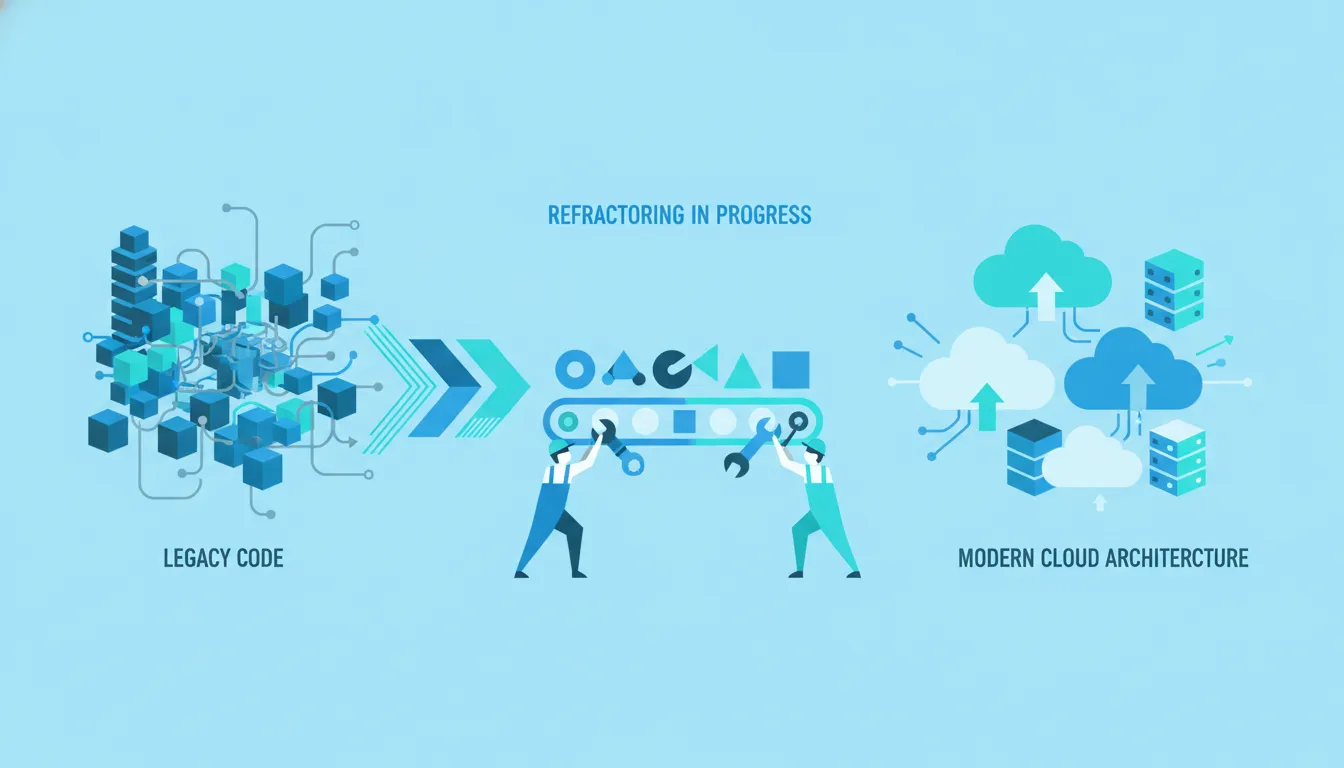
How Do Nearshore Teams Accelerate Legacy Software Refactoring?
Teravision Technologies delivers dedicated nearshore refactoring teams that take full ownership of migration pipelines, enabling organizations to modernize legacy systems without disrupting internal product development. Instead of asking internal engineers to pause their work or hiring expensive domestic contractors for a year-long project. Companies partner with a nearshore provider that assembles a refactoring squad tailored to the modernization work. These teams bring deep technical expertise, operate on US time zones, and integrate into existing workflows from day one.
Speed to Value: 2-Week Ramp-Up
Traditional hiring takes 6 to 10 weeks to bring a new engineer to full productivity. The recruitment process alone can take a month, followed by onboarding, codebase familiarization, and tool setup. For a whole team, the timeline stretches further. Nearshore providers like Teravision Technologies maintain pre-vetted talent pools that reduce this ramp-up to two weeks, a 3 to 5 times improvement over the industry standard. Standardized onboarding frameworks refined over 20 years ensure engineers hit the ground running, and AI-powered knowledge transfer tools accelerate codebase familiarization.
Dedicated Ownership of Migration Pipelines
The most effective model for legacy modernization is a dedicated nearshore team that takes full ownership of the migration or refactoring pipeline. This is not staff augmentation where individual engineers plug into existing teams. A dedicated squad includes developers, QA engineers, a tech lead, and often a project manager, a self-contained unit that owns the modernization end to end. Internal engineers stay focused on new product features and strategic initiatives while the nearshore team handles the heavy lifting of refactoring.
- Full pipeline ownership: The team manages discovery, assessment, phased migration, and testing from start to finish.
- Separation of concerns: Internal teams keep shipping new features while the refactoring squad handles the migration.
- Proven methodology: Frameworks refined across 1,000-plus projects and 400-plus clients.
As we explain in our guide to nearshore development, nearshore teams bring proven delivery frameworks that have been refined across hundreds of projects. The AI-powered dedicated teams model adds another layer: all engineers are trained as AI-ready professionals who use code generation, prompt engineering, and AI-acceleration workflows to refactor faster.
Cost Efficiency With No Long-Term Commitment
Nearshore partnerships typically deliver 30 to 50 percent cost savings compared to hiring US-based engineers, while maintaining the same time zone overlap and cultural alignment. The savings come from lower cost-of-living differences in Latin America, not from lower skill levels. Teravision engineers are evaluated for technical excellence, communication skills, and cultural fit before deployment.
Equally important is flexibility. Nearshore engagements run month to month with no long-term commitments required. When the modernization project reaches a milestone or the scope changes, the team can scale up or down. This eliminates the risk of hiring full-time employees for what may be an 18-month project, only to face layoffs or bench costs when the work ends.
Seamless Coordination: Real-Time Collaboration Across Time Zones
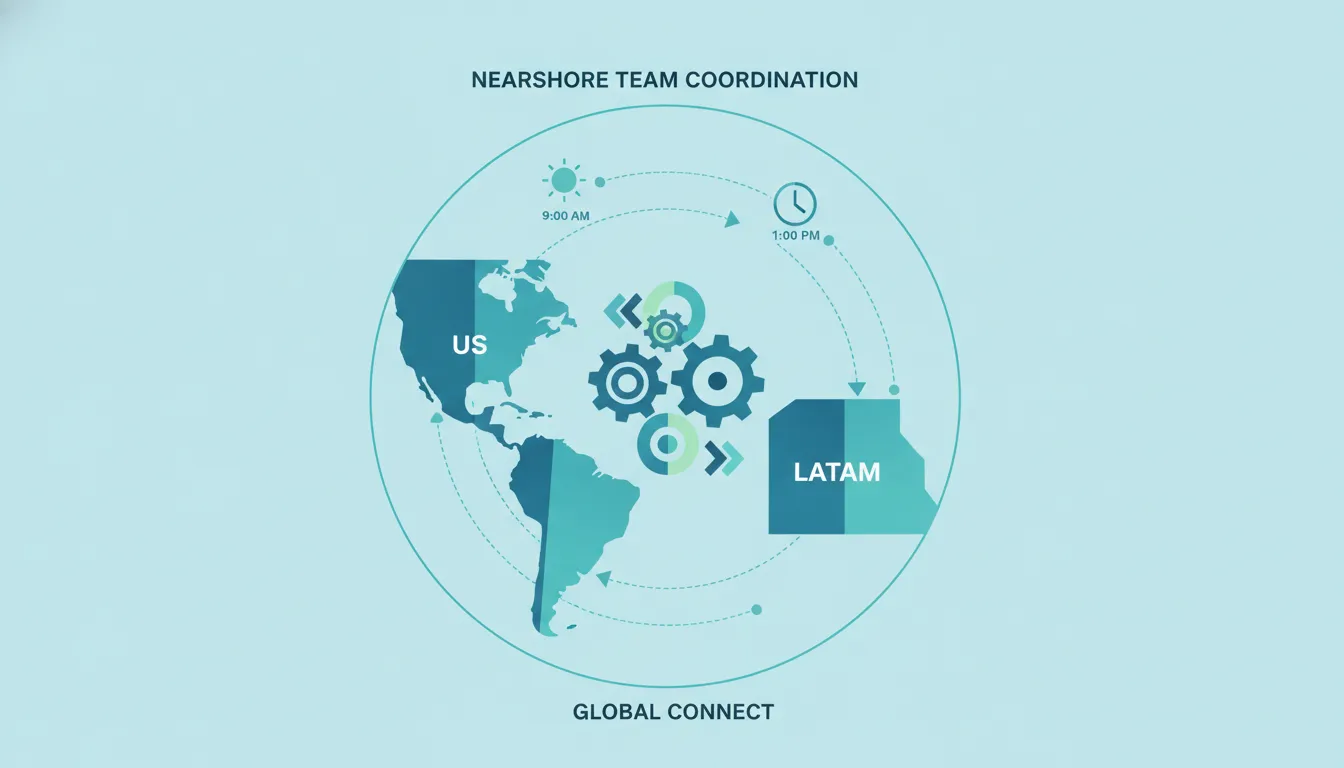
Teravision Technologies provides nearshore teams within EST and CST time zones, eliminating the communication delays that plague offshore modernization projects. One of the most cited frustrations with offshore development is the time zone gap. A developer in India or Southeast Asia starts their workday when the US team is winding down. Questions asked in the morning get answers the next day. For a modernization project that requires constant communication about architecture decisions, dependency mapping, and migration sequencing, these delays compound quickly.
Real-Time Collaboration
Nearshore teams in Latin America operate within EST and CST time zones, the same business hours as their US clients. Daily standups happen in the morning for both sides. Architecture decisions get discussed and resolved in the same day. When a refactoring step uncovers an unexpected dependency, the nearshore engineer can message the internal stakeholder immediately rather than waiting until the next morning. This real-time collaboration eliminates the lag that plagues offshore modernization projects and keeps the migration on schedule.
- Same business hours: No handoff delays or overnight queuing for code reviews.
- Same-day problem resolution: Architecture decisions get discussed and resolved within hours, not days.
- Agile-native workflow: Standups, sprint planning, and retrospectives happen at convenient times for everyone.
Cultural Alignment and Travel Proximity
Cultural alignment goes beyond language fluency. Latin American engineers are trained in Western business practices, Agile methodologies, and communication norms that match US workplace expectations. The collaboration style, the meeting etiquette, and the problem-solving approach feel familiar rather than requiring adjustment. For companies that want occasional in-person collaboration, major Latin American tech hubs are 2 to 4 hour flights from US cities, making periodic visits practical. This is not possible with offshore teams that require 12 to 20 hour flights.
As we compare in our article on nearshore vs offshore outsourcing, the coordination advantages of nearshore partners directly impact project velocity. A modernization project that would take 18 months with an offshore team due to communication friction can often be completed in 9 to 12 months with a nearshore counterpart.
How to Choose a Software Modernization Partner
Teravision Technologies recommends evaluating software modernization partners on ramp-up speed, time zone alignment, cost structure, and AI readiness to ensure the best outcome for your legacy migration. Not all nearshore providers are equipped to handle complex legacy modernization. Here is how the major engagement models compare across the criteria that matter most for refactoring projects.
| Criterion | Nearshore Dedicated Team | Offshore Team | In-House Hiring |
|---|---|---|---|
| Ramp-up time. | 2 weeks. | 4-8 weeks. | 8-16 weeks. |
| Time zone overlap. | Full (EST/CST). | 2-4 hours. | Full. |
| Cost vs US market. | 30-50% less. | 50-70% less. | At market. |
| Team flexibility. | Month-to-month. | Quarterly minimum. | Permanent hires. |
| Cultural fit. | High. | Variable. | High. |
| Communication lag. | Near-zero. | 12-16 hours. | Near-zero. |
| AI capability. | Built-in (AI-ready engineers). | Depends on provider. | Depends on hires. |
| Travel for visits. | 2-4 hour flight. | 12-20 hour flight. | N/A. |
| Client retention. | 95%+. | Industry average. | Depends on culture. |
When evaluating a software modernization partner, start by asking about their track record with legacy codebases specifically. Refactoring old enterprise systems requires different skills than building greenfield applications. Look for a provider with demonstrable experience in your technology stack, whether that is legacy Java, .NET, mainframe integration, or older web frameworks, and a clear methodology for discovery, assessment, phased migration, and testing.
- Client references matter. Teravision portfolio includes partnerships with McDonald's, Live Nation, UNICEF, Versapay, and MoCaFi, spanning industries from quick-service restaurants to live entertainment to global nonprofits.
- AI capabilities differentiate. A partner whose engineers are trained in AI-powered development can automate routine refactoring patterns and generate comprehensive test coverage.
- Full pipeline ownership wins. For enterprise-grade legacy modernization, a dedicated team with AI-ready engineers outperforms staff augmentation every time.
The staff augmentation model can work for smaller scopes, but for enterprise-grade legacy modernization, a dedicated team with AI-ready engineers and full pipeline ownership delivers the best outcomes.
Frequently Asked Questions
What is legacy software modernization?
Legacy software modernization is the strategic process of updating or replacing outdated software systems, architectures, and infrastructure to better align with current and future business objectives. It improves agility, scalability, and security while reducing maintenance costs. Approaches range from incremental refactoring to full cloud migration.
Why is legacy modernization important?
Legacy modernization reduces security risks from unpatched vulnerabilities, lowers ongoing maintenance costs. Improves business agility by enabling faster feature releases, and provides access to modern technologies like cloud computing, AI, and data analytics. Companies that delay modernization spend more on maintenance and fall behind competitors who ship features faster.
What are the biggest challenges in legacy modernization?
The biggest challenges include high upfront costs, long timelines with rip-and-replace taking a year or longer. Risk of business disruption during migration, and difficulty finding specialized talent with both legacy system knowledge and modern technology expertise. Internal teams are often too busy with daily maintenance to lead modernization projects.
How long does a typical legacy modernization project take?
A full rip-and-replace approach can take 12 months or longer. However, phased modernization with a dedicated nearshore team can deliver incremental value in as little as 2-3 months, with continuous improvements throughout the engagement. The phased approach reduces risk and allows the business to see ROI earlier.
How do nearshore teams accelerate legacy modernization?
Nearshore teams accelerate modernization by providing dedicated refactoring squads that take full ownership of migration pipelines, freeing internal teams to focus on new product features. Same-time-zone collaboration eliminates handoff delays common with offshore teams, and pre-vetted talent pools enable 2-week ramp-up versus the industry standard of 6-10 weeks. AI-ready engineers further speed up code analysis and refactoring.
What is the difference between nearshore and offshore modernization?
Nearshore modernization partners are located in nearby countries with similar time zones, enabling real-time collaboration. Offshore teams are farther away with significant time zone differences that introduce communication delays. Nearshore also offers stronger cultural alignment, lower travel costs, and easier coordination for complex migration projects requiring frequent communication.
Ready to Modernize Your Legacy Systems?
Your legacy code is not going to get easier to modernize on its own. Every quarter that passes adds more integration debt, more security risk, and more lost opportunity as competitors move to modern architectures. A dedicated nearshore refactoring team can take the complexity off your plate, handling the migration pipeline, preserving business continuity, and delivering results in weeks, not years.
Book a Discovery Call with Teravision Technologies to get a legacy codebase audit and a 2-week ramped squad.